01
Universal Acceptance
Visa and Mastercard networks: fuel, EV charging, tolls, parking, and beyond. The same card body that works on your own network also carries a scheme credential for everywhere else.
Ask Us Anything
Accepted anywhere where Visa or Mastercard is, with the controls closed-loop programs were built around.
Explore Technological Capabilities
Fleet card issuers are shifting from closed proprietary networks to scheme-based (Visa/Mastercard) open-loop programs - it's the strategic consideration most of the market is making right now, and it usually means giving up control to get acceptance.
Reins runs open-loop on the same card body and account you already have. It's an activation, not a migration to a second platform.
The same policy engine that decides closed-loop transactions can also decide open-loop ones in real time, so the rules that already work for you don't get left behind when the card leaves your network.
Most open-loop programs trade control for reach: the moment a card leaves your own network, rules stop applying and reporting splits into two systems. Reins runs both acceptance models, your network and the open scheme, through the same policy engine and the same ledger, so broader acceptance doesn't mean a second set of tools.
01
Visa and Mastercard networks: fuel, EV charging, tolls, parking, and beyond. The same card body that works on your own network also carries a scheme credential for everywhere else.
Ask Us Anything02
Product restrictions, merchant category restrictions, geo limits, and time windows, enforced at the network level on your own sites, and carried onto scheme transactions under delegated authorization, where the request routes to the same Reins policy engine for a real-time decision.
Talk To Our Expert
03
Where the scheme supports it, authorization is delegated straight to your policy engine for a live decision. Where it doesn't, the issuer authorizes first and Reins applies control, matching, and reconciliation right after. Either path, the transaction lands in the same place.
Ask Us Anything
04
Issue one hybrid card that combines closed-loop and open-loop capability. On your own network it works as your closed-loop card, with your pricing and product rules. Everywhere else it runs on the scheme. Both sides are managed on the same card, with one set of rules and one account, so drivers carry one card and your team manages one.
Talk To Our Expert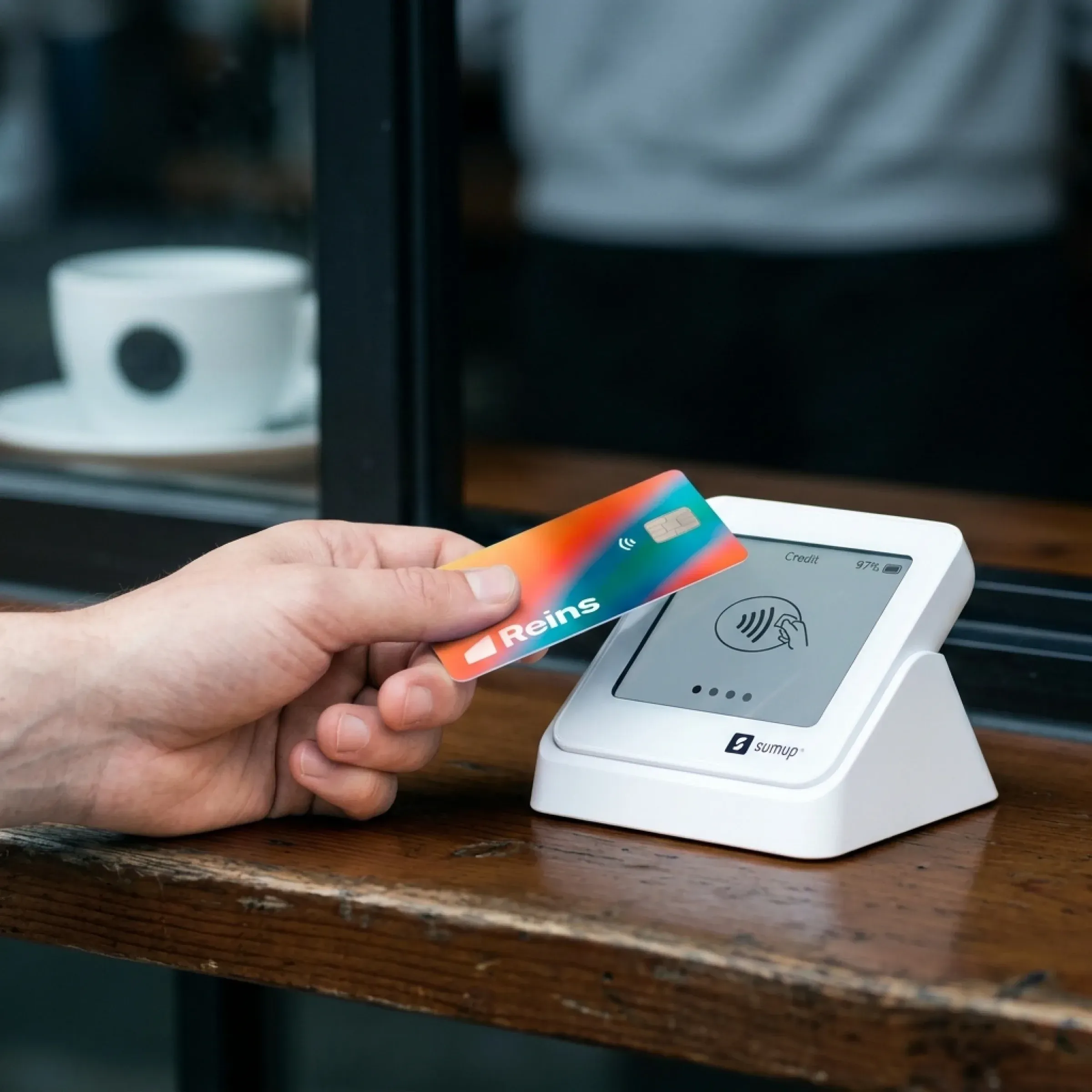
05
Closed-loop and open-loop spend settle into the same account. One balance, one statement, one ERP posting — not two systems to reconcile against each other. No lag in credit controls.
Ask Us Anything
06
With open-loop cards, every station issues its own VAT invoice, so there's no single invoice to reclaim from. Reins fixes that. Drivers scan the receipt in the app, the VAT details are read automatically and matched to the card transaction, then checked against official VAT rates and supplier records. Finance gets a clear country-by-country VAT view, ready for their own team or their VAT adviser to recover.
Talk To Our Expert
07
Open-loop cards support Apple Pay and Google Pay. Drivers can use the program from the mobile app or their phone wallet and pay wherever the scheme is accepted.
Ask Us Anything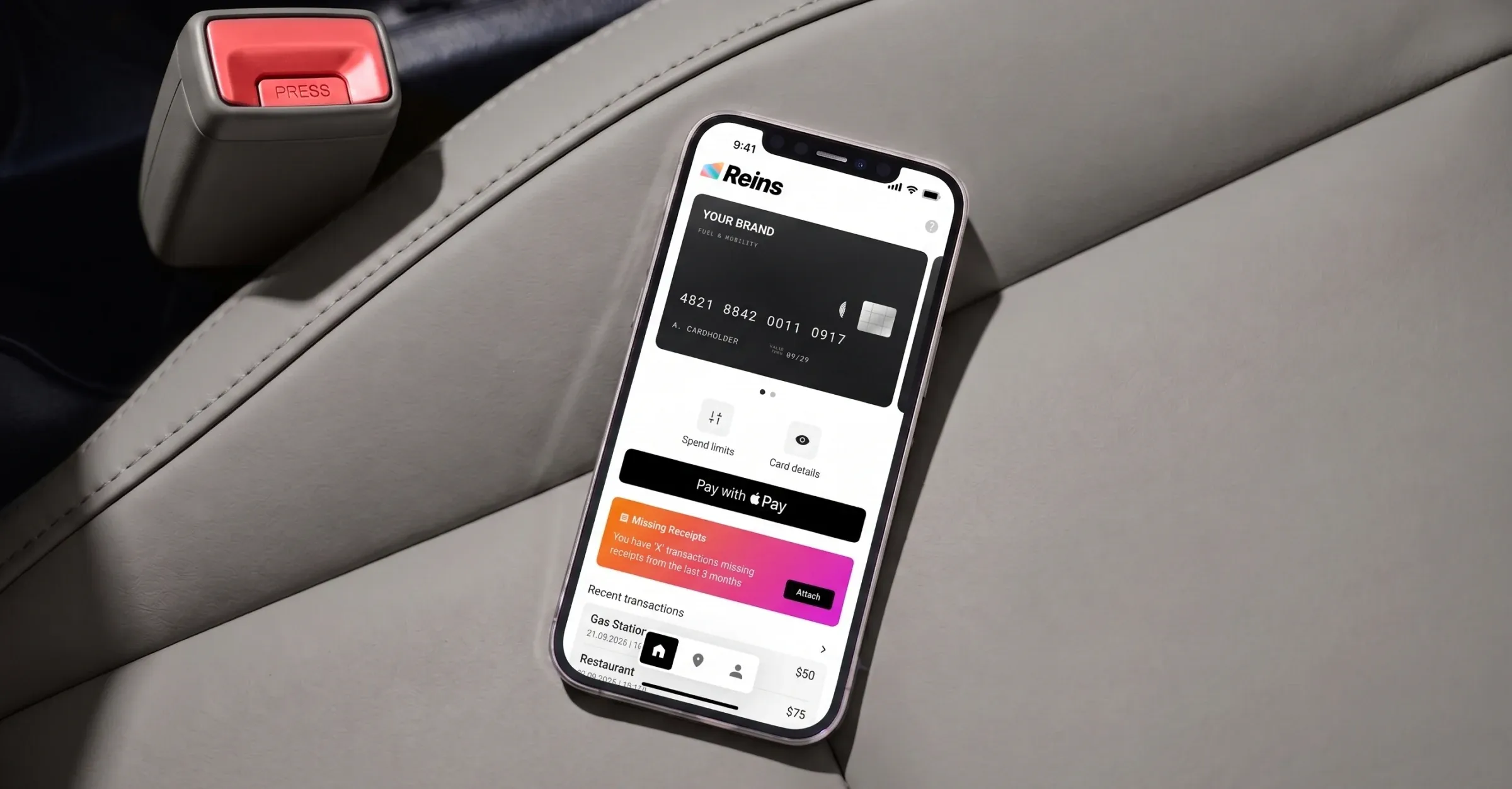
How It Works
The card is tapped or inserted at any scheme-accepting merchant, on your network or off it. The same card body works both places.
The request is routed to the right path automatically. With delegated authorization, the decision runs through your own policy engine in real time, with the same rules as on your network. Without it, the issuer authorizes and Reins checks the transaction against your policy right after.
Whether it clears through your own switch or through the scheme, settlement lands in the same ledger. There's no separate open-loop statement to reconcile by hand.
Both program types are invoiced together and reported from one data model, which feeds analytics, fraud monitoring and finance. On an open loop, each scanned receipt is matched to its transaction and checked against official VAT data, so finance gets a country-by-country VAT view that's ready for recovery.
How Do They Actually Compare?
| Capability | Closed-Loop Only | Open-Loop Only |  Both Models On One Platform |
|---|---|---|---|
| Acceptance | Your network only | Most open-loop issuers get you acceptance, but they don't carry your own rules onto the scheme rails, and they don't put the spend back in one ledger with your closed-loop program | Both on one program: your own network, plus everywhere the scheme is accepted |
| Spend controls off-network | Not offered | Typically, weak or post-pay | Real time with delegated authorization, checked right after authorization without it |
| Line-item fuel data | Full Level-3 (pump, product, liters, odometer) | Scheme data only, merchant-dependent | Full Level 3 on your network. Off it, line-item data wherever the market supports it, such as the US. Receipt matching fills in the rest. |
| Pricing | Your negotiated contract price | Merchant's own price | Your price lists and discounts on your network, the merchant's price off it. One ledger either way |
| Reporting | One system | Usually a second, separate system | Consolidated across both |
| Getting started | Not offered | Often a full platform switch | Typically, an activation on the account and card body you already have |
| Reinvent Growth | Not offered | Sometimes | Always. Easy to add new growth engines, or expand growth by using Reins' solutions See Solutions |
A closed-loop card only works on the issuer's own network, a fuel retailer's own stations, for example. An open-loop card carries a scheme credential (Visa or Mastercard), so it's accepted anywhere that scheme is taken. Reins runs both off the same card body and account, so it isn't a choice between them.
Yes. An open-loop card is a new card with its own issuance and provisioning process. It can also be issued as a hybrid card that works on your own network and everywhere the scheme is accepted, so drivers carry one card for both.
Where the scheme supports delegated authorization, yes - the request routes to the same policy engine that decides your on-network transactions, applying the same product, merchant, geo, and time-window rules in real time. Where a scheme doesn't support that, Reins applies control and reconciliation right after the issuer's authorization.
Typically, 2-3 seconds. That's slightly slower than on-network authorization because the request travels through the card scheme before the decision comes back — still fast, just a different path.
No. Off your own network, the driver pays the merchant's posted price, like with any other card. With a hybrid card, your own sites still apply your contract price, so drivers get the best of both. Either way, every transaction lands in your ledger, your invoice and your reporting.
No. An open-loop program needs a licensed issuer and a processor. You can bring your own, or work with partners Reins already works with. Either way, cards, controls, billing and reporting run through the same platform as your closed-loop program.
Yes. Open-loop cards can be added to Apple Pay and Google Pay when the card's BIN is enabled for it. Drivers can also use the card from the mobile app.
Issue Payment CardIssue fuel, EV, prepaid, and open-loop cards from one platform, spending controls, white-label programs, and PCI DSS/PSD2 compliance built in.
Authorization ServerA dedicated, configurable authorization server for fleet payments, real-time decisions, complex approval flows, fully integrated with card management.
Real-Time Spend ControlDefine and enforce spend rules in real time, vehicle, driver, and card-level limits, MCC filtering, geo-fencing, and cascading policy control.


