Payment ProcessorThe transaction lifecycle every charging session and fuel purchase run through.
Payment Solutions
EV Charging Support
Fuel and EV charging, authorized, rated, and invoiced through the same account and the same credit line without a second platform to bolt on.
Explore More Solutions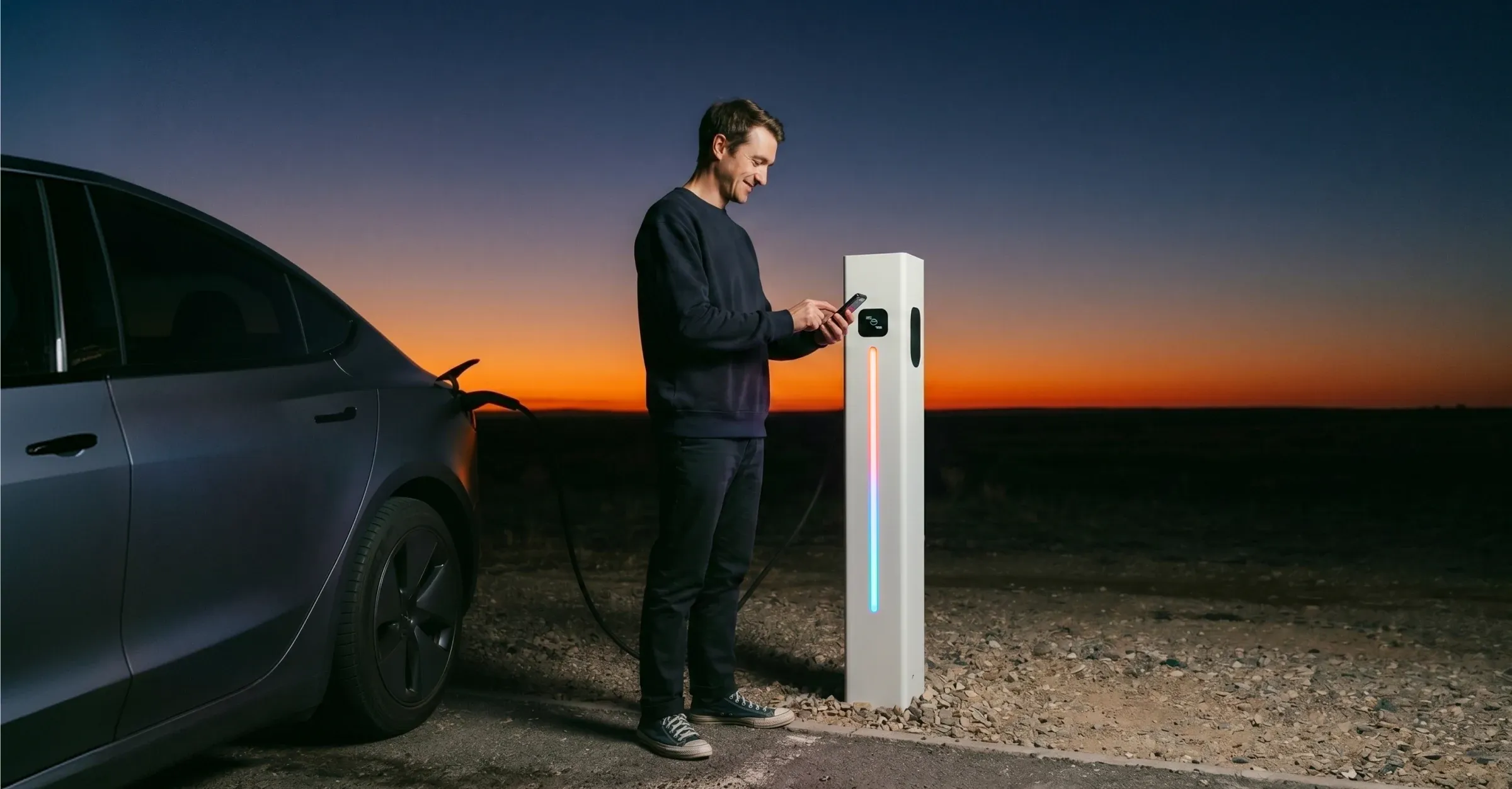
On This Page
Reading time: ~4 Min ReadReins operates as an eMSP with native OCPI integration (2.1.1 and 2.2.1), connecting to any compliant Charge Point Operator - EV charging runs in production today, not on a roadmap.
Charging sessions authorize against the same credit and policy engine that governs fuel, with the same restrictions, the same account, and an explicit reason for any decline.
Mixed-energy pricing is native: kWh and hydrogen per-kilogram quantities are rated and invoiced through the same engine as liquid fuel - one card, one account, one invoice, not a conversion layer bolted on.
How Does EV Charging Actually Fit Into A Fuel Card Platform?
Through the same platform, not a separate one. Reins operates as an eMSP with native OCPI integration, so charging sessions run through the same credit, policy, and billing engine as fuel, connecting to any compliant Charge Point Operator instead of locking you into one.
Connects To Any Compliant Charge Point Operator
Native OCPI integration (2.1.1 and 2.2.1) implementing the core modules (Credentials, Locations, Tokens, Sessions, Commands, CDRs, and Tariffs), so you're not locked into one CPO.
Same Credit & Policy Engine As Fuel
Charging sessions authenticate and authorize in real time against the same engine that governs fuel, with restrictions set at company, identification-means, or vehicle level.
A Reason On Every Decline
Sessions that don't authorize return an explicit refusal reason, the same transparency the platform applies to fuel transactions.
The Platform Controls The Charge Point
Sessions are opened and closed by the platform itself, controlled either by interval or as a single pulse — not handed off to a third-party session manager.
AC And DC, Priced Separately
Multiple charging products are supported and priced as distinct products, not a single flat rate regardless of charge type.
Mixed-Energy Rating, Not A Conversion Layer
kWh quantities are captured, priced, and invoiced through the same rating engine as liquid fuel.
One Card, One Account, One Invoice
The charge detail record (CDR) returned by the charge point creates the transaction, rated and invoiced alongside fuel on the same account, not a second statement to reconcile.
How You Do It
How Does An EV Charging Session Actually Get Authorized And Billed?
The identification means - card, token, or app - is presented at any compliant Charge Point Operator.
The same credit and policy engine that governs fuel decides the session, with company, identification-means, or vehicle-level restrictions applied, and an explicit reason if it declines.
The charge point opens and closes under platform control, by interval or as a single pulse, for as long as the session runs.
The charge detail record from the CPO creates the transaction, rated and invoiced alongside fuel on the same account.
Single-Purpose EV App vs. Bolted-On EV Module vs. Reins
How Do They Actually Compare?
Capability
Single-Purpose EV Charging App
Bolted-On EV Module
 Native, One Platform
CPO connectivity
Own network only, or a limited partner list
Vendor-dependent
Any compliant CPO, via native OCPI
Credit / spend controls
A separate EV rules engine means a driver can be within policy on fuel and out of policy on charging, or the reverse, because nothing is actually checking both against the same rules.
Often a separate rules engine
Same credit and policy engine as fuel
Billing
A second statement
Sometimes combined, sometimes not
One account, one invoice, alongside fuel
Charging product pricing
Often flat
Vendor-dependent
AC and DC priced as distinct products
Decline transparency
Varies
Varies
Explicit refusal reason, every time
Reinvent Growth
—
Rarely
Always. The same platform adds wallet, loyalty, and marketing layers as you grow See Solutions
Single-Purpose EV Charging App
CPO connectivity
Own network only, or a limited partner list
Credit / spend controls
A separate EV rules engine means a driver can be within policy on fuel and out of policy on charging, or the reverse, because nothing is actually checking both against the same rules.
Billing
A second statement
Charging product pricing
Often flat
Decline transparency
Varies
Reinvent Growth
—
Bolted-On EV Module
CPO connectivity
Vendor-dependent
Credit / spend controls
Often a separate rules engine
Billing
Sometimes combined, sometimes not
Charging product pricing
Vendor-dependent
Decline transparency
Varies
Reinvent Growth
Rarely
Reins — Native, One Platform
CPO connectivity
Any compliant CPO, via native OCPI
Credit / spend controls
Same credit and policy engine as fuel
Billing
One account, one invoice, alongside fuel
Charging product pricing
AC and DC priced as distinct products
Decline transparency
Explicit refusal reason, every time
Reinvent Growth
Always. The same platform adds wallet, loyalty, and marketing layers as you grow See Solutions
FAQ.
Yes. Reins operates as an eMSP with native OCPI integration, so EV charging runs on the same platform as fuel, not a separate app or a second card.
Any Charge Point Operator that's OCPI-compliant. The platform implements the core OCPI modules (2.1.1 and 2.2.1), so it isn't limited to one charging network. You can integrate your own CPO partners or work through roaming providers who give you easy access to a large network coverage.
They're on the same account. Charging sessions are authorized against the same credit and policy engine as fuel, and the resulting transaction is rated and invoiced alongside fuel on one invoice.
The same. Restrictions are set at company, identification-means, or vehicle level, through the same policy engine that governs fuel, not a parallel rules system.
Yes. Multiple charging products are supported and priced separately.
It declines with an explicit reason, the same transparency applied to fuel transactions, not a silent failure at the charge point.
Yes. Hydrogen is priced by the kilogram through the same rating engine as fuel and EV charging, kWh, kilograms, and liters all rated natively, not through a conversion layer.
Related Solutions.
Card Management SystemThe account and hierarchy fuel and EV spend share.
Real-Time Spend ControlSet the same restrictions across fuel and EV charging.